6 Common PMBOK 8 Principles Mistakes to Avoid on the 2026 PMP Exam
SJ
Sarah Jenkins, PMP, CSM
Senior Agile Coach & Culture Catalyst
⏱ 7 min read📖 ~1,400 words⚠️ Article 40🏁 Cluster 3 Finale
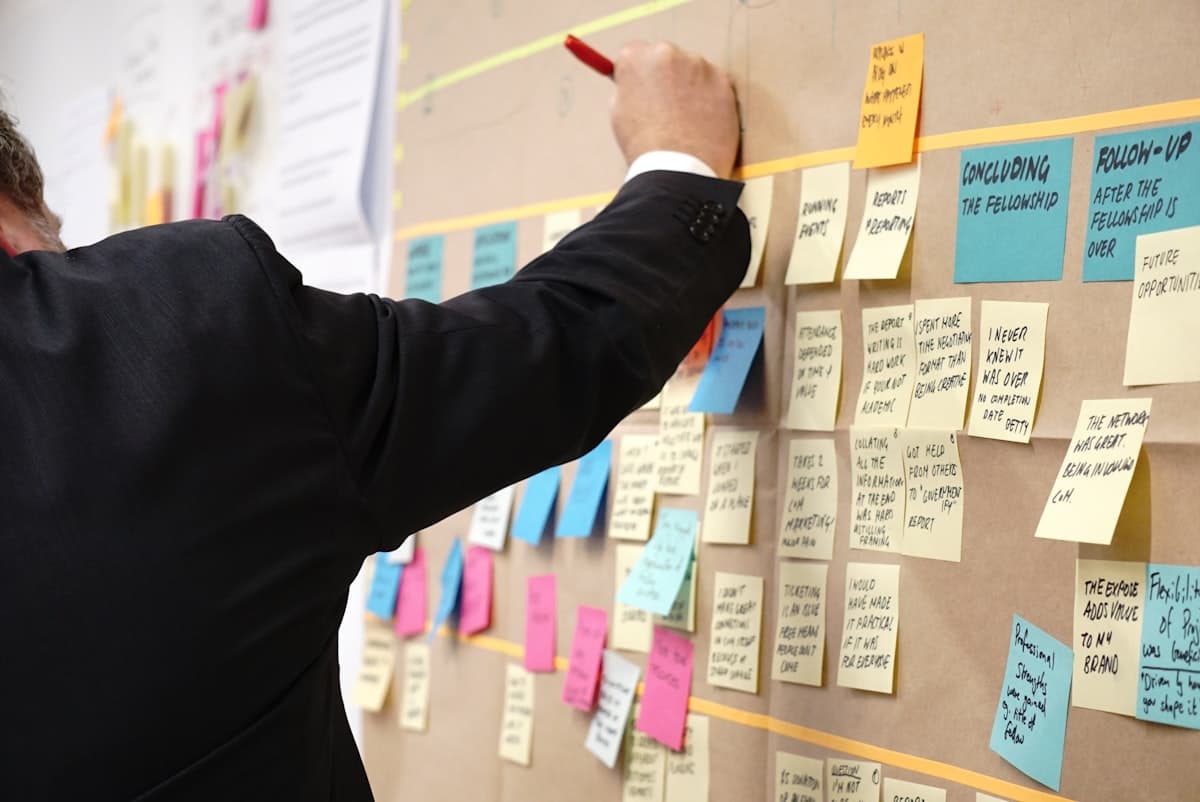
A visual guide to 6 common pmbok 8 principles mistakes to avoid on the 2026 pmp exam for the 2026 PMP Exam
TL;DR — The 10 Traps at a Glance
PMP 2026 Exam Traps: The 10 Principle Mistakes
The most dangerous wrong answers on PMBOK 8 principle questions are not obviously wrong. They feel correct — they are what an experienced PM would instinctively do. That is exactly why they are traps. The 10 mistakes below represent the most consistently tested wrong answer patterns across all 6 principles. Know the pattern. Recognise the trap. Choose the principled answer instead.
I have reviewed thousands of practice exam answers over 15 years. The mistakes below are not the ones candidates make because they do not know the principles. They are the ones candidates make because they know too much — their hard-won project management experience produces an instinctive answer that PMBOK 8 explicitly marks as wrong. The antidote is not more knowledge. It is the conscious recognition that your experience-based instinct is being tested against a principled standard — and choosing the standard.
The 10 Most Common PMBOK 8 Mistakes on the PMP Exam
01🔒 P4
Treating Sponsor Approval as a Substitute for PM Accountability
High Frequency
✗ The Trap
"The Sponsor approved it, so the PM should proceed." Candidates treat governance approval as the end of the PM's professional obligation — once approved, the PM's accountability is transferred to the approver.
✓ Correct Application
Sponsor approval of a professionally questionable action does not transfer PM accountability. The PM retains full responsibility for providing complete, accurate analysis before any approval is sought — and for flagging concerns after approval if new information emerges.
02💎 P2
Treating Schedule Adherence as Value Delivery
High Frequency
✗ The Trap
"Deliver on the planned date to maintain stakeholder confidence." When a scope or quality reduction is needed to hit the schedule, candidates choose the deadline — treating on-time delivery as the success criterion.
✓ Correct Application
Schedule adherence is never the success criterion — value delivery is. When a trade-off reduces the deliverable's fitness for purpose, the correct answer surfaces the value impact to the Sponsor with a full analysis and recommendation, not a silent scope cut to protect the baseline date.
03✅ P3
Fixing the Defect Without Fixing the Process
High Frequency
✗ The Trap
"The PM should correct the defect and continue the sprint." Candidates address the symptom — the visible defect — without addressing the process that produced it, then wonder why the same defect appears next sprint.
✓ Correct Application
Every recurring defect signals a process failure. The correct answer has two parts: (1) fix the immediate defect, and (2) conduct root-cause analysis and implement a prevention measure — typically a DoD improvement — to stop recurrence. One without the other is always an incomplete answer under P3.
04🌐 P1
Limiting Impact Analysis to the Project Boundary
High Frequency
✗ The Trap
"The PM should assess schedule and cost impact of the change." Candidates evaluate the change's impact entirely within the project boundary — scope, schedule, budget — without considering what changes outside it.
✓ Correct Application
Any significant project decision must be evaluated for its cross-boundary impact before implementation — which departments, downstream systems, parallel projects, or external stakeholders are affected? The holistic answer always widens the analysis before acting, even when the correct internal impact assessment has already been completed.
05🌱 P5
Treating Sustainability as Optional Context
High Frequency
✗ The Trap
"Note the sustainability consideration in the risk register and proceed with the lower-cost option." Candidates acknowledge sustainability but treat it as secondary to cost — a footnote rather than a compliance obligation.
✓ Correct Application
Sustainability is a compliance obligation under ECO 2026 Task T2 — not optional context. It must be formally evaluated and presented to the governance authority with full ESG analysis. The decision to trade off sustainability belongs to the governance authority. The PM's obligation to surface it formally is non-negotiable.
06🚀 P6
Confusing Empowerment with Abdication
Medium Frequency
✗ The Trap
"The PM should let the team resolve the conflict themselves — empowering the team means not interfering." Candidates interpret empowerment as the PM removing themselves from difficult people situations, reasoning that intervention is controlling.
✓ Correct Application
Empowerment means creating the conditions for team autonomy, not disappearing from difficult situations. The PM removes impediments, facilitates safe dialogue, coaches toward resolution, and retains full accountability (P4) for project outcomes. Servant leadership is active participation — not passive non-interference.
07🔒 P4
Using "The AI Recommended It" as a Sufficient Defence
High Frequency
✗ The Trap
"The AI tool's output supports this decision — the PM should implement based on the tool's recommendation." Candidates treat AI tool endorsement as equivalent to professional PM validation, delegating accountability to the technology.
✓ Correct Application
AI tools inform PM decisions; they do not make them. The PM must validate any AI output against their professional knowledge, identify data gaps the model may not have accounted for, and take professional accountability for every decision that uses AI-generated information. "The AI said it was fine" is never a complete answer under P4.
08🌐 P1
Treating Lessons Learned as a Project-Only Exercise
Medium Frequency
✗ The Trap
"The PM should document lessons learned on schedule performance, cost management, and technical delivery quality." Candidates capture project-internal metrics only — the traditional closure data — and consider the exercise complete.
✓ Correct Application
Under P1, lessons learned must capture the full system impact of the project — what happened to the organisation, the community, the environment, and the downstream stakeholders who used the deliverable. A holistic lessons learned exercise asks "what did we learn about the whole system this project was part of?" not just "did we hit our targets?"
09💎 P2
Assuming Value Follows Automatically from Output Delivery
Medium Frequency
✗ The Trap
"The project delivered the system on time and within budget — close it out." Candidates treat output delivery as equivalent to value delivery, closing the project at go-live without confirming whether the conditions for benefit realisation are in place.
✓ Correct Application
Closing a project at delivery without confirming benefit realisation conditions — adoption support, measurement frameworks, process changes — is a P2 failure. The PM's value obligation extends to Closing, where confirming that the organisation is set up to actually realise the intended benefit is a mandatory deliverable, not an optional afterthought.
10🔒 P4
Memorising Principles Without Internalising Their Exam Expression
Most Systemic
✗ The Trap
"I know all 6 principles — I memorised them in week one." Candidates confuse knowing the principle names and definitions with being able to apply them correctly under exam conditions. Definitional knowledge produces approximately 55–60% accuracy on principle scenario questions. Not enough to pass.
✓ Correct Application
The July 2026 PMP exam tests principle application, not recall. The preparation that produces 75–85% accuracy is scenario practice — specifically on the scenarios where your instinct is wrong. Seek out the questions that make you uncomfortable. Those are the questions you will see on exam day. Your discomfort is your preparation signal, not your reason to avoid them.
⚠️ The Pattern Behind All 10 Mistakes
Every single mistake above follows the same meta-pattern: the wrong answer is what an experienced, well-intentioned PM would instinctively do in a real project — and the correct answer is what a principled PM does when they consciously apply the PMBOK 8 framework. The exam is not testing your experience. It is testing whether your experience has been refined by principled judgment. The 10 mistakes above are the refinement gap. Close it, and you pass.
🧠
PMP Prep Zone — Cluster 3 Final Practice QuestionMulti-Principle · Multiple Mistake Traps · Difficulty: Hard
Scenario: A project manager is closing a 14-month ERP implementation project for a mid-sized logistics company. The system went live on schedule and 2% under budget. The Sponsor is pleased and has signed the technical acceptance certificate. The PM now wants to close the project promptly. During the closure process, the PM: (1) prepares lessons learned covering only schedule and cost performance, (2) processes the final vendor payment without a formal quality sign-off — reasoning that go-live acceptance covers quality, (3) closes the project without confirming whether the operational team has the training and support to use the new system effectively, and (4) does not document or report that two legacy departments were unable to access the new system during the final go-live week, though normal service was eventually restored. The Sponsor re-signs the project closure document.
Which statement BEST describes the PM's Closing Focus Area failures in terms of PMBOK 8 principles?
A
The PM has completed the project successfully — on time, under budget, and with Sponsor acceptance. The issues raised are outside the formal project scope and do not constitute principle violations.
B
The PM has committed four principle violations: (1) P1 — lessons learned failed to capture cross-system impact (the legacy department outages); (2) P2 — closing without confirming benefit realisation conditions (operational training) assumes value will follow from output delivery without the PM verifying it; (3) P3 — processing vendor payment without formal quality sign-off bypasses embedded quality standards; and (4) P4 — not documenting and disclosing the legacy department outages to the Sponsor is a transparency and accountability failure, regardless of Sponsor re-signature on a document prepared without this information.
C
The PM's only failure is omitting the legacy department outage from the lessons learned. The other closure actions are standard practice and do not violate PMBOK 8 principles.
D
The PM should reopen the project to address the operational training gap, as closing without this confirmation invalidates the Sponsor's acceptance.
✓ Correct Answer: B
Why B is correct — four principles, four closing failures
This scenario is the Cluster 3 finale — designed to consolidate all 10 mistake patterns into a single realistic closing scenario. The PM made four distinct principle errors: P1 failure: Lessons learned that cover only schedule and cost are holistically incomplete. The legacy department outages — a cross-system impact — should have been captured and disclosed. This is Mistake 8 (treating lessons learned as a project-only exercise). P2 failure: Closing without confirming operational training and adoption support assumes the system will deliver value automatically. It will not — a system nobody knows how to use is an output without an outcome. This is Mistake 9 (assuming value follows from output delivery). P3 failure: Processing the vendor payment without formal quality sign-off bypasses the quality verification step that is a Closing Focus Area obligation. Go-live acceptance covers technical acceptance, not the full quality standard. P4 failure: Not disclosing the legacy department outages to the Sponsor before re-signature is a transparency and accountability violation. The Sponsor signed a closure document prepared without material information the PM was aware of. This is Mistake 1 (treating Sponsor approval as a substitute for PM accountability) — in this case, the PM manipulated the conditions under which Sponsor approval was obtained.
Why the others are wrong
A — "On time, under budget, with Sponsor acceptance" is the iron triangle success definition that P2 explicitly replaces. All four principle violations occurred within a technically successful project. C — Identifying only one of four violations misses the systemic nature of the Closing failures. Each of the four actions is a distinct principle violation, not a minor procedural shortcut. D — Reopening the project to address the training gap is an overcorrection. The PM should have confirmed training before closure, not reopened after it. The correct action is a thorough closure that includes benefit realisation confirmation — not post-closure project revival.
📋 ECO 2026: All three domains · Closing Focus Area · P1: Holistic View · P2: Value · P3: Quality · P4: Accountability · Mistakes 1, 8, 9


🏁
You've Completed Cluster 3 — The PMBOK 8 Principles Guide
Articles 28–40: from the pillar overview to the six individual principles, from cross-reference mapping to sector tailoring, from the hardest principles to the most common mistakes. You now have the deepest available preparation for the PMBOK 8 principles section of the July 2026 PMP exam. The final step is scenario practice — applying this knowledge under exam conditions until the correct answer is your first instinct, not your second thought.
The most common Principle 4 mistake is treating Sponsor approval as a substitute for PM accountability. Candidates select answers like "proceed since the Sponsor approved it" when a professionally questionable action is involved. Under PMBOK 8, Sponsor authority to approve does not transfer PM accountability for the consequences — the PM must surface complete, accurate information before any approval is sought, and retain full accountability for implementing decisions regardless of who authorised them.
The most common Principle 2 mistake is treating schedule adherence as equivalent to value delivery. Candidates select "deliver on the planned date" answers when the scenario clearly indicates that on-time delivery produces significantly diminished outcomes. PMBOK 8 consistently rewards the answer that surfaces the value trade-off to the Sponsor — presenting the quantified impact on outcomes — rather than silently accepting a schedule-driven reduction that undermines the project's benefit case.
The most common Principle 5 mistake is treating sustainability as optional context that can be acknowledged and deprioritised. Candidates select answers like "note the sustainability consideration in the risk register and proceed with the lower-cost option." Under PMBOK 8, sustainability is a compliance obligation under ECO 2026 Task T2 — it must be formally evaluated and presented to the governance authority with full ESG analysis, not acknowledged and set aside for cost convenience.
The most common Principle 6 mistake is confusing empowerment with abdication — selecting answers where the PM removes themselves from difficult people situations, reasoning that non-interference is empowering. Empowerment means creating the conditions for team autonomy while the PM retains accountability (P4) for project outcomes. The PM facilitates, coaches, removes impediments, and supports. Disappearing from difficult situations in the name of empowerment is a P6+P4 double failure.
Memorising the 6 principle names is necessary but entirely insufficient. The July 2026 PMP exam never asks candidates to recall a principle definition — it presents scenarios requiring correct application. Candidates who memorise principles without internalising their exam expression (the specific behavioural pattern each principle produces in a scenario) will still fail principle questions even if they can recite all 6 by name. Scenario practice — especially on uncomfortable questions where instinct is wrong — is the preparation that closes the gap.
SJ
Sarah Jenkins
PMBOK 8 Principles Specialist
PMBOK 8 Principles Specialist and certified PMP with deep expertise in value-driven project delivery. Sarah writes exclusively on the 6 core PMBOK 8 principles and their real-world application.