The Resources Domain in PMBOK 8: Managing People, Tools, and Integrated Procurement
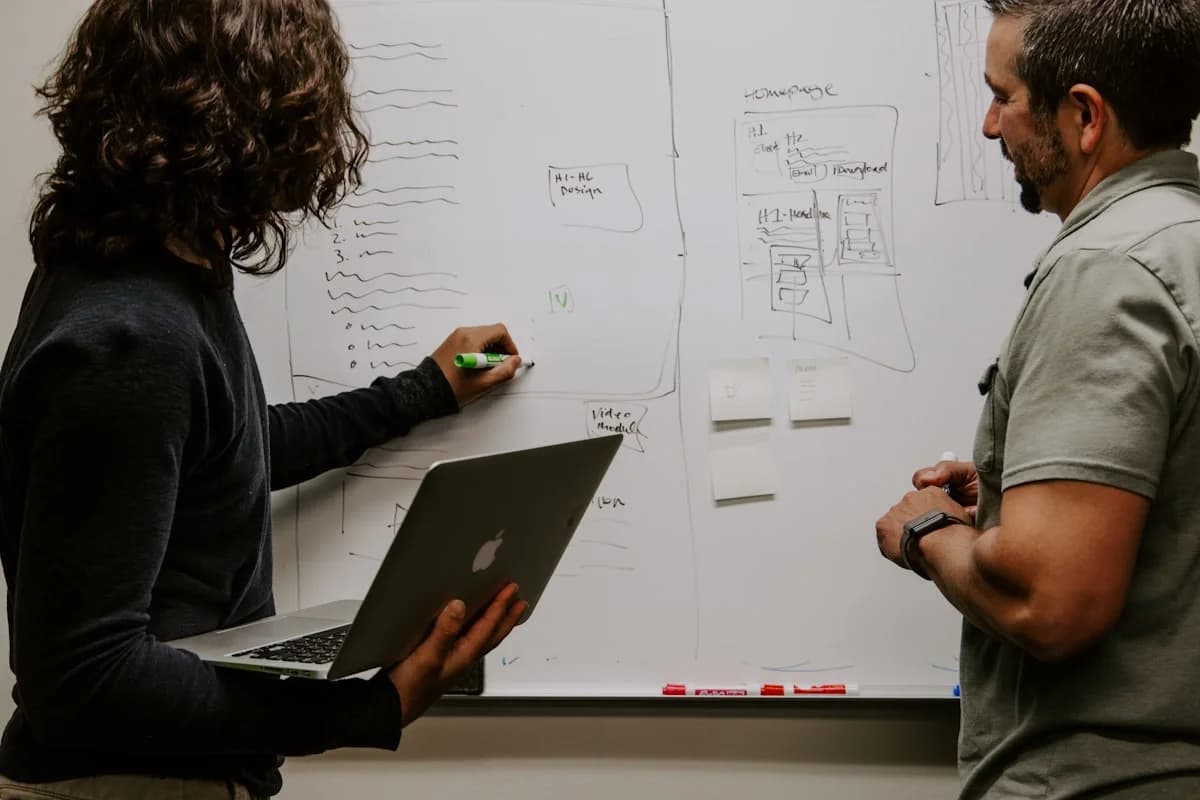
Photo: Unsplash · Resources are not assets on a spreadsheet. They are people with expertise, vendors with obligations, and tools with capabilities. The Resources domain is the discipline of bringing all of them to peak performance — together.
TL;DR — Resources Domain at a Glance
Resources: The 60-Second Summary
The Resources domain covers all project resources — human and physical. It is the home of servant leadership, team empowerment, and psychological safety (aligned to Principle 6), and the home of integrated Procurement — vendor selection, contract management, and supplier performance. The July 2026 exam tests whether the PM can lead a high-performing team, manage contract disputes through the correct resolution sequence, and handle virtual and cross-cultural team dynamics. Procurement questions appear here — not in a separate Procurement domain.
The Resources domain covers everything the project needs to execute — and in PMBOK 8 that means two distinct but deeply interconnected categories. Human resources are the people dimension: the team members, contractors, vendors, and specialists whose knowledge, effort, and judgment make delivery possible. Physical resources are the material dimension: equipment, facilities, materials, technology infrastructure, and tools. Both require planning, acquisition, and active management — and both can become critical risk factors when they are unavailable, underperforming, or misallocated.
👥
Human Resources
People — internal and contracted
Internal team members: assigned from within the organisation, managed through servant leadership and empowerment
Contracted specialists: external individuals engaged under time-and-materials or fixed-fee arrangements
Vendor teams: supplier organisations delivering specific project outputs under contract
Subject matter experts: domain specialists engaged for specific phases or decisions
Virtual team members: distributed across geographies, time zones, and cultures
Materials: consumables, raw materials, components acquired for incorporation into deliverables
Facilities: workspace, labs, data centres, staging environments
Software and tools: development platforms, project management tools, analytics systems
Procured physical resources: purchased or leased through vendor contracts — managed here and in Risk
Key PM obligation: Acquire on time, allocate optimally, manage utilisation, track against resource plan
Servant Leadership and Team Empowerment in PMBOK 8
PMBOK 8's approach to human resource management is grounded in servant leadership — a PM orientation that is explicitly aligned with Principle 6 (Build an Empowered Culture). The shift from traditional authority-based team management to servant leadership is one of the most significant cultural expectations the exam tests, and it is often the source of the most counterintuitive correct answers.
⚠️ Traditional Management Mindset
Authority-driven team leadership
PM directs the team on how work should be done
PM assigns tasks and monitors individual output
PM resolves team conflicts by making the decision
Team reports problems upward and waits for direction
PM controls information flow to manage team perception
Performance is managed through accountability pressure
Team members execute; PM thinks and decides
✓ Servant Leadership — PMBOK 8
Empowerment-driven team leadership
PM removes impediments so the team can determine how to do the work
PM creates conditions for team self-organisation and autonomy
PM facilitates conflict resolution — team reaches its own solution where possible
Team has the psychological safety to surface problems without fear
PM ensures transparent information flow to enable team decision-making
Performance grows through coaching, capability development, and trust
Team members think and decide within their scope; PM enables and supports
⚙️ Elena's Framework Insight
The exam test for servant leadership vs traditional management is simple: "Does this answer increase the team's capacity to operate autonomously, or does it increase the PM's control over how the team operates?" Servant leadership always increases team autonomy. Traditional management answers increase PM control. When an exam scenario presents both options, PMBOK 8 rewards autonomy — every time. The one exception: when team autonomy is creating a risk that only the PM has the authority to address. Then the PM acts — but on the risk, not on the team's method.
Integrated Procurement: Managing Vendors as Project Resources
One of the most practically significant structural changes in the Resources domain is the embedding of Procurement. In PMBOK 6, Procurement Management was a standalone knowledge area with its own planning, execution, and control processes. In PMBOK 8, it lives within Resources — because acquiring resources through vendor contracts is not fundamentally different from acquiring resources through internal allocation. Both require planning what you need, acquiring it, managing its performance, and closing it out when the work is done.
📦 Procurement — Integrated in the Resources Domain
Vendor management as resource acquisition and performance management — also active in Risk domain for supply chain and procurement risk
📋
Make-or-Buy Analysis
Should this capability be delivered by the internal team or acquired through a vendor? Criteria: cost, time, quality, risk, strategic sensitivity, and available internal capacity
🔍
Vendor Selection
Procurement method selection (competitive bid, sole-source, framework agreement), evaluation criteria, SOW development, vendor assessment and award — governed by organisational procurement policy
📄
Contract Management
Managing vendor performance against contractual obligations, monitoring deliverable quality and timeline, processing invoices, managing change orders, and maintaining formal communication records with vendors
🤝
Vendor Relationship Management
Beyond compliance — building a working relationship with key vendors that enables proactive problem-solving, early warning of delivery risks, and collaborative resolution when issues arise
Contract Dispute Resolution Sequence under PMBOK 8
Contract dispute scenarios are among the most consistently tested situations in the Resources domain. The exam tests whether the PM follows the correct resolution sequence — beginning with the contract itself and escalating through defined mechanisms — rather than improvising or immediately involving legal counsel or senior management. Here is the framework:
Review the contract — establish what each party's obligations actually are
The first step in any dispute is returning to the contract. What does it specify? What are the delivery obligations, quality standards, payment terms, and change management procedures? Many disputes dissolve at this step — because one or both parties have been operating from an assumption rather than the contract text.
Always start here
2
Document the dispute formally with specific evidence
Document the specific nature of the dispute: what was contracted, what was delivered, the gap between them, the evidence supporting the PM's position, and the date and history of the issue. Formal documentation is required for any subsequent escalation and protects the project's position.
3
Attempt direct resolution through negotiation with the vendor
Before invoking formal dispute mechanisms, the PM engages the vendor's account management or project lead in direct discussion. Many disputes can be resolved at this level — the vendor may not be aware of the full impact, or there may be a legitimate explanation that changes the assessment of the situation.
4
Invoke the contract's formal dispute resolution mechanism
If direct negotiation does not resolve the dispute, invoke the mechanism the contract specifies — escalation clause (vendor senior management), mediation (neutral third-party facilitation), or arbitration (binding third-party decision). The contract defines the sequence; the PM follows it. Never skip steps in the defined mechanism.
5
Involve legal counsel or procurement governance — as a last resort
Legal escalation is reserved for situations where the formal dispute resolution mechanism has been exhausted or where the vendor is acting in clear breach of contract with material impact on the project. The PM never threatens legal action as a negotiating tactic — this damages the vendor relationship and typically triggers a legal defensive posture that makes resolution harder.
Last resort only
Virtual and Cross-Cultural Team Management: The Modern Resources Challenge
The July 2026 PMP exam reflects the reality that the majority of project teams in 2026 include distributed, virtual, or cross-cultural elements. The Resources domain tests the PM's ability to manage these dynamics proactively — not as edge cases but as core delivery conditions:
🌍Time zone fragmentation
Establish overlapping working hours for synchronous collaboration; rotate meeting times to share the burden of inconvenient hours equitably; document decisions asynchronously so all team members have access regardless of when they work.
Resources: Team coordination
🗣️Cross-cultural communication norms
Invest in cultural awareness across the team — communication directness, decision-making styles, hierarchy expectations, and conflict norms differ significantly across cultures. Create explicit team norms that bridge cultural differences rather than assuming one culture's defaults apply to all.
Resources: Stakeholder sensitivity
🔕Reduced informal communication
Deliberately create informal connection opportunities — virtual coffees, non-work team channels, retrospective social elements. The absence of hallway conversations is a risk to team cohesion and must be consciously compensated for through structured informal engagement.
Resources: Psychological safety
👁️Remote performance visibility
Shift from presence-based to output-based performance assessment. Define clear deliverable expectations and review them at cadenced intervals. Resist the instinct to increase surveillance — it erodes psychological safety and autonomy, which are the conditions that produce high performance.
Resources: Servant leadership
⚡Distributed conflict resolution
Address conflicts early and directly — do not let email misunderstandings escalate through silence. Shift conflict conversations to video calls where non-verbal cues are available. Document resolutions to prevent recurrence. Virtual conflict is harder to detect and easier to ignore — both are risks.
Resources: Conflict management
🤖AI tool integration in teams
AI-assisted tools are increasingly part of project team workflows — code generation, documentation, analysis, scheduling. The PM's Resources domain obligation includes ensuring the team understands what AI tools can and cannot be trusted for, and that accountability for AI-generated outputs remains with the human team member.
Resources: AI governance
The Resources Domain Across the 5 Focus Areas
The Resources domain is primary in Planning (resource plan built, procurement initiated) and Executing (team managed, vendors performing). It is active across all five:
Initiating
High-level resource requirements identified; make-or-buy preliminary analysis; key resource constraints noted in charter
Planning
Resource plan developed; procurement strategy defined; RACI built; vendor SOW and contracts planned; team development approach established
Executing
Team managed via servant leadership; vendors performing against contract; conflicts resolved; resource constraints addressed; psychological safety maintained
M&C
Team performance monitored; vendor deliverables assessed against contract; resource utilisation tracked; disputes escalated via correct resolution sequence
Closing
Vendor contracts formally closed; team performance documented; resource lessons captured; team recognition delivered
Photo: Unsplash · The Resources domain is where projects live or die at the human level. Teams that are trusted, supported, and well-led outperform those that are controlled — and vendors who are managed as partners deliver more reliably than those managed as compliance risks.
🧠
PMP Prep Zone — Practice QuestionResources Domain · Contract Dispute · Offshore Vendor · Difficulty: Hard
Scenario: A project manager is leading a hybrid software development project. An offshore development vendor — contracted under a fixed-price agreement for a specific module — has delivered a build that fails 34% of the agreed acceptance test cases. The vendor claims the failing tests contain requirements that were not included in the original Statement of Work and that the additional requirements constitute scope creep for which they are entitled to a change order. The PM's review of the contract and the original SOW shows that 18 of the failing test cases do align directly with requirements in the SOW, while 16 are based on requirements that were communicated informally during a project call — and were not formally added to the SOW through the project's change control process. The contract includes a formal dispute resolution clause specifying escalation to the vendor's regional director before any mediation is initiated. The Sponsor has suggested "getting the lawyers involved immediately."
Applying PMBOK 8's Resources domain, what is the PM's BEST course of action?
A
Follow the Sponsor's direction and involve legal counsel immediately — the vendor has delivered a non-compliant build and the project is at risk. The contract must be enforced through legal channels.
B
Formally document the dispute distinguishing the two categories of failing tests: (1) the 18 test cases aligned to SOW requirements — these are legitimate contract non-conformances the vendor must resolve; (2) the 16 test cases based on informally communicated requirements — these represent a change control failure on the project's part and should be raised as a formal change order. Then escalate to the vendor's regional director per the contract's dispute resolution clause, presenting both the contract non-conformance position and the PM's acknowledgement of the informal requirements issue.
C
Accept the vendor's position that all failing tests represent scope creep and raise a formal change order for all 34 failing test cases. The project's failure to document the requirements formally means the project cannot enforce any of the test cases.
D
Require the vendor to fix all 34 failing test cases at no additional cost. The project paid for a working module; the vendor must deliver it regardless of the SOW distinction.
✓ Correct Answer: B
Why B is correct — Resources domain procurement dispute management
This scenario tests both the contract dispute resolution sequence and the PM's professional integrity in a nuanced situation where both parties have valid positions. Answer B is correct for three reasons: (1) It distinguishes the two genuinely different categories of dispute — the 18 SOW-aligned failures are legitimate contract non-conformances; the 16 informally communicated requirements are a change control failure that the PM must own. (2) It follows the contract's dispute resolution mechanism — escalation to the vendor's regional director — before any other escalation action, per the contract clause. (3) It demonstrates professional integrity: the PM does not attempt to enforce the informal requirements as if they were contracted obligations. The correct PMBOK 8 Resources domain answer always starts with the contract, follows its resolution mechanism, and separates what is legitimately contracted from what was not formally documented.
Why the others are wrong
A — Involving legal counsel immediately skips every step in the contract's defined dispute resolution mechanism. The contract specifies escalation to the vendor's regional director first. Legal escalation is the last resort after the defined mechanism has been exhausted. C — Accepting the vendor's position on all 34 failing tests abandons the project's legitimate position on the 18 SOW-aligned failures. The PM's change control failure on the 16 informal requirements does not eliminate the vendor's obligation to deliver the 18 requirements that are in the SOW. Conflating the two is a negotiating capitulation, not a contract management decision. D — Requiring the vendor to fix all 34 test cases without distinction ignores the project's own change control failure. A PM who insists on enforcing informally communicated requirements as contractual obligations is both factually wrong and professionally dishonest — the vendor's position on the 16 informal requirements has merit.
The Resources domain covers all project resources — human (team members, contractors, vendors) and physical (equipment, materials, facilities, tools). It is the home of servant leadership, team empowerment, psychological safety, virtual team management, and integrated Procurement. Vendor selection, contract management, and supplier performance management live here, reflecting that procurement is fundamentally a resource acquisition and performance management activity. Procurement also appears in the Risk domain for supply chain and procurement risk scenarios.
Procurement is embedded in Resources because procurement is fundamentally a resource acquisition activity — the PM acquires external human and physical resources through contractual mechanisms rather than internal allocation. Managing a vendor team is not conceptually different from managing an internal team; both require performance management, clear deliverable expectations, and accountability. By integrating Procurement into Resources, PMBOK 8 eliminated an artificial boundary and aligned with how experienced PMs actually operate. Procurement risk scenarios appear additionally in the Risk domain.
Servant leadership means the PM prioritises enabling the team's performance over directing it — removing impediments, facilitating decision-making, providing the conditions for autonomy and psychological safety, and coaching rather than controlling. The PM's authority is used to serve the team's capacity to deliver, not to micromanage how they deliver. This is aligned with Principle 6 (Empowered Culture): the PM creates conditions for team autonomy, then holds the team accountable for outcomes within those conditions. On the exam, servant leadership answers increase team autonomy; traditional management answers increase PM control — PMBOK 8 rewards autonomy.
Contract disputes follow a structured resolution sequence: (1) review the contract to establish each party's obligations; (2) document the dispute formally with evidence; (3) attempt direct negotiation with the vendor; (4) invoke the contract's formal dispute resolution mechanism (escalation clause, mediation, or arbitration as specified); (5) involve legal counsel only as a last resort after the defined mechanism is exhausted. The exam consistently rewards following the contract's own resolution mechanism before any external escalation. Never skip the defined steps, and never threaten legal action as a negotiating tactic.
In predictive delivery: formal resource breakdown structures, RACI matrices, staffing plans, and resource histograms planned upfront and managed against a baseline. In agile: team-centric and self-organising — the team decides how to allocate their collective capacity to sprint commitments; the PM's role shifts to removing impediments and protecting team capacity from interruptions. In hybrid delivery: predictive resource planning governs overall staffing while agile self-organisation governs sprint-level work allocation. The PM must match their management style to the delivery approach — not impose predictive resource control on an agile team.
ER
Elena Rodriguez, PMP, PgMP
Lead Performance Architect
Lead Performance Architect and PMP/PgMP strategist specializing in PMBOK 8 performance domains. Elena has over 15 years of experience in project governance and high-stakes enterprise delivery, focusing on the intersection of strategic finance and risk management.